
Project Based Learning: A Practical Guide for Schools
Why do students remember a school trip for years but forget a chapter within weeks? Often, it is because they did something real. Project based learning builds on this idea. Students explore a real question over time, create something useful, and share what they learned. This guide explains what project based learning is, how it works, and why it matters. It offers grade-wise examples from Jr. KG to Grade 10. It also gives teachers and principals clear steps to begin. Whether you lead a school or teach a class, you will find ideas you can use.
What Is Project Based Learning?
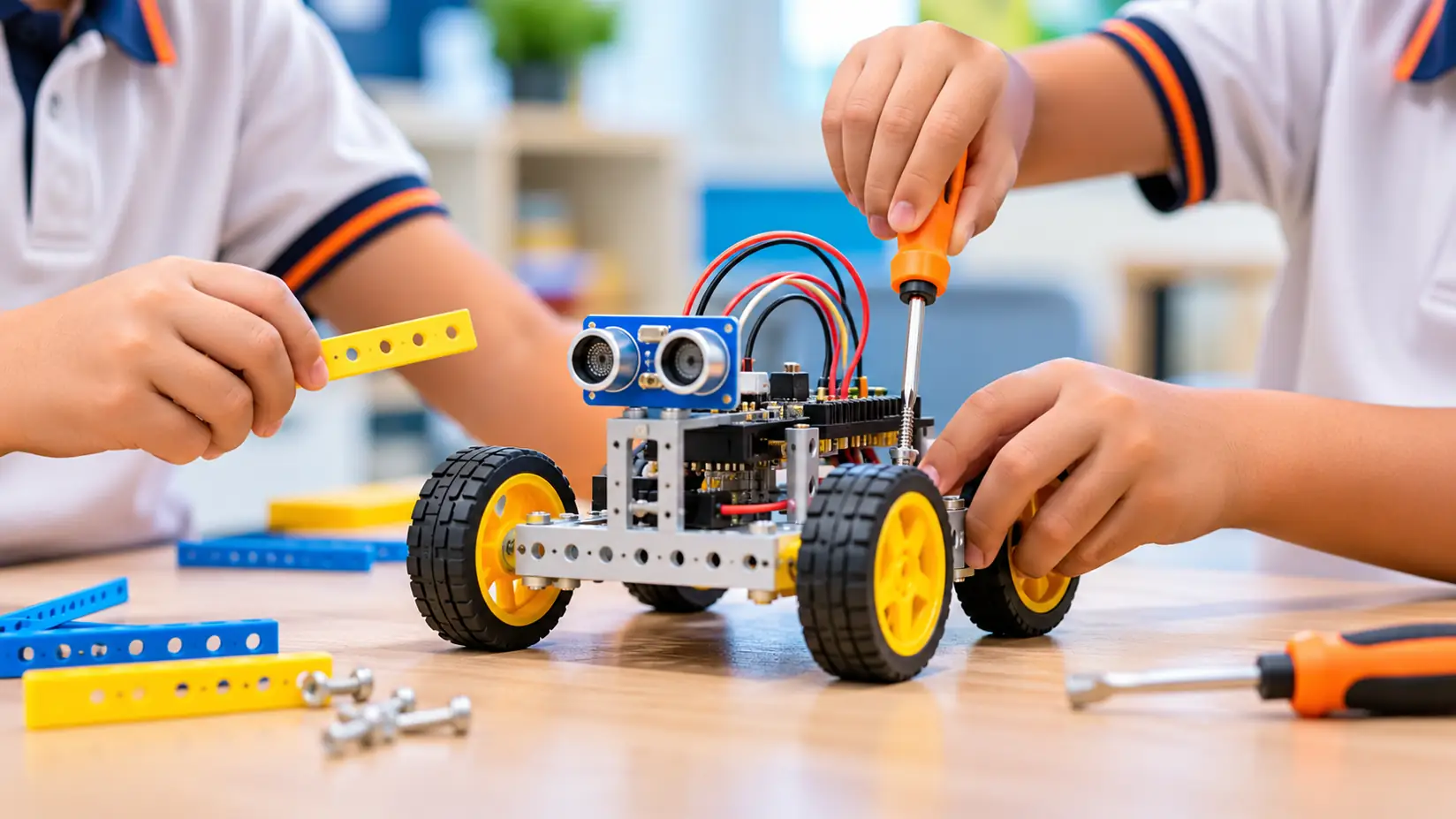
Project based learning is a teaching method in which students gain knowledge and skills by working on a real problem or question over an extended period. They investigate, build a product or solution, and present it to an audience. The teacher guides the process rather than only delivering content.
Project based learning in education is closely linked to experiential learning, but the two are not the same. Experiential learning is the wider idea of learning through experience and reflection. Project based learning is one structured way to deliver it. Inquiry-based learning, in contrast, starts with student questions and may not end in a product. Student-centred learning describes the overall approach, where learners take an active role.
This shift also fits Indian policy. The National Education Policy 2020 moves schools away from rote learning toward experiential, inquiry-driven teaching. It also recommends a 10-day bagless period for students in Classes 6 to 8. Meanwhile, the PBLWorks Gold Standard model offers a useful checklist. It says a strong project lasts more than a few days, centres on a challenging question, and ends with a public product.
Benefits of Project Based Learning for Students
The benefits of project based learning go beyond marks. Well-designed projects give students regular practice in the skills that schools want to build.
- Critical thinking: Students judge information, compare options, and explain their choices.
- Problem-solving: They face open tasks that have no single answer.
- Creativity: They design their own models, posters, or solutions.
- Communication: They explain ideas to classmates, teachers, and visitors.
- Teamwork: They share roles and learn to handle disagreement.
- Confidence: Finishing a real product builds pride and ownership.
- Practical application: They use maths, science, and language in real situations.
The research is encouraging, but it is not final. A 2017 MDRC literature review called the evidence “promising but not proven.” Some studies showed gains in engagement, motivation, and self-belief. However, results varied by subject and by project quality. Therefore, schools should treat project based learning as a strong method that needs good design and teacher support. It is not a guaranteed fix.
How Does Project Based Learning Work in Schools?
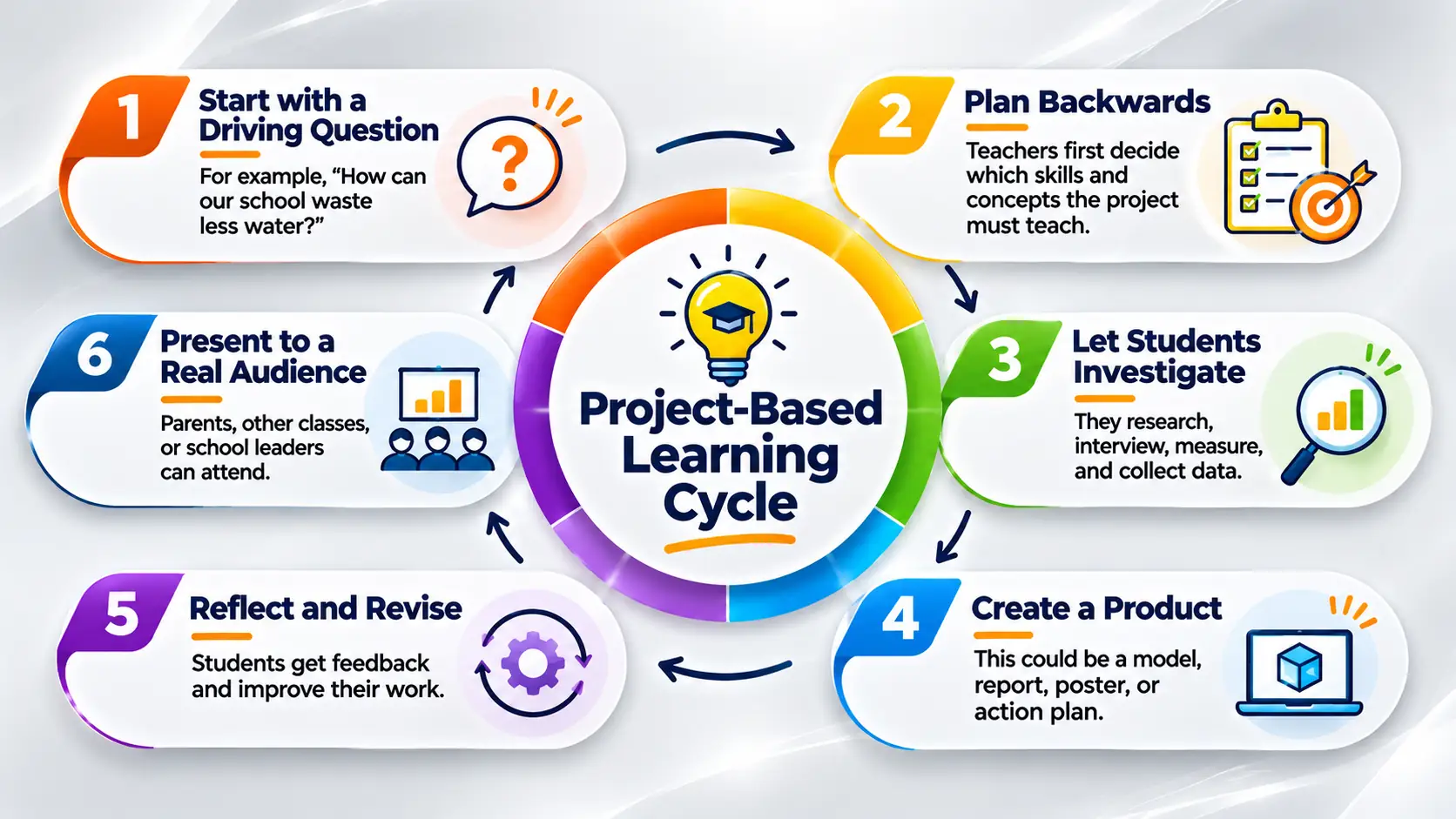
Project based learning works through a clear cycle. Students ask a question, investigate, create, improve, and present. Here are the steps most schools follow.
Project Based Learning Examples for Different Grades
These project based learning examples are illustrative ideas, not documented case studies. Teachers can adapt them to their own school. Each one also works as a ready project based learning activity.
Jr. KG and Sr. KG: Our Class Garden
Children plant seeds, water them, and draw what they see each week. They count leaves and talk about what plants need. Learning outcomes include observation, early counting, new vocabulary, and a sense of responsibility.
Grades 1 to 3: Our Class Shop
Students set up a pretend shop. They make price tags, use play money, and give change. As a result, they practise addition, subtraction, and speaking skills in a fun way.
Grades 4 to 5: Save Water at School
Students measure daily water use, interview staff, and suggest simple fixes. They present a poster and a short plan. This builds data handling, writing, and civic awareness.
Grades 6 to 8: Design a Healthy Canteen Menu
Students survey classmates, read nutrition labels, and stay within a budget. Finally, they pitch the menu to school management. Learning outcomes include maths, science, persuasive speaking, and teamwork.
Grades 9 to 10: Solve a Local Problem
Students pick a community issue, such as waste segregation. They collect data, analyse it, and write a proposal. This develops research, reasoning, and professional communication.
[IMAGE 3: Middle school students presenting a project to a panel of teachers]
Project Based Learning vs Traditional Learning
Both approaches have a place. Direct instruction is efficient for core facts and basic skills. Project based learning adds depth and application. The table shows the main differences.
| Feature | Traditional Learning | Project Based Learning |
|---|---|---|
| Teacher role | Delivers content | Guides and coaches |
| Student role | Listens and recalls | Investigates and creates |
| Main goal | Cover the syllabus | Apply concepts to real problems |
| Assessment | Mostly tests | Rubrics, products, and presentations |
| Time needed | Shorter lessons | Longer, sustained units |
Many strong schools blend both. They teach key concepts directly and then apply them through projects.

How Teachers Can Implement Project Based Learning
You do not need to change everything at once. Start small and build confidence.
- Begin with one short project. A one-week unit is easier to manage than a full term.
- Link it to your syllabus. Choose a project that covers topics you must teach anyway.
- Use simple rubrics. Share the criteria before students begin.
- Set group roles. This prevents one student from doing all the work.
- Add checkpoints. Short reviews keep projects on track.
- Assess individuals too. Combine group marks with personal reflection.
Common challenges include limited time, noisy classrooms, and uneven teamwork. Clear timelines, group roles, and regular check-ins solve most of these. The MDRC review also notes that teacher training and ongoing support are likely essential. Principals can help by giving teachers planning time and by sharing good practice across grades.
Frequently Asked Questions
What is project based learning in simple words?
It is learning by doing a meaningful project. Students answer a real question, create something, and share it. Along the way, they learn subject content and skills such as teamwork and problem-solving.
Is project based learning suitable for primary students?
Yes. Younger children need shorter, simpler projects with clear steps and hands-on materials. A class garden or a pretend shop works well. Teachers guide more closely at this stage.
How is project based learning different from experiential learning?
Experiential learning means learning through experience and reflection. Project based learning is a structured form of it, built around a driving question and a final product. Field trips and workshops are experiential but may not be projects.
How long should a project last?
There is no fixed rule. The PBLWorks model says a strong project lasts more than a few days. In practice, many teachers try one to two weeks for primary grades and longer for older students.
How do you assess project based learning?
Teachers use rubrics, checkpoints, written reflections, and final presentations. Peer and self-assessment can add useful evidence. Together, these show both the product and the learning process.
Conclusion
Project based learning helps students use what they learn. It builds thinking, teamwork, and confidence, and it fits well with the experiential approach that Indian policy encourages. The evidence is promising, so careful design and teacher support matter.
EduPro Learning is an education management organisation focused on brain development through experiential learning programmes for students from Jr. KG to Grade 10. The team has over 13 years of experience in Abacus and Vedic Mathematics, including the BrainPro Abacus programme, Vedic Math, Robotics, Personality Development and Teachers Training Program School principals and educators who want to bring more hands-on learning into their classrooms can explore experiential learning programmes with EduPro Learning.
