
Junior Abacus: A Simple Way to Build Strong Maths Skills
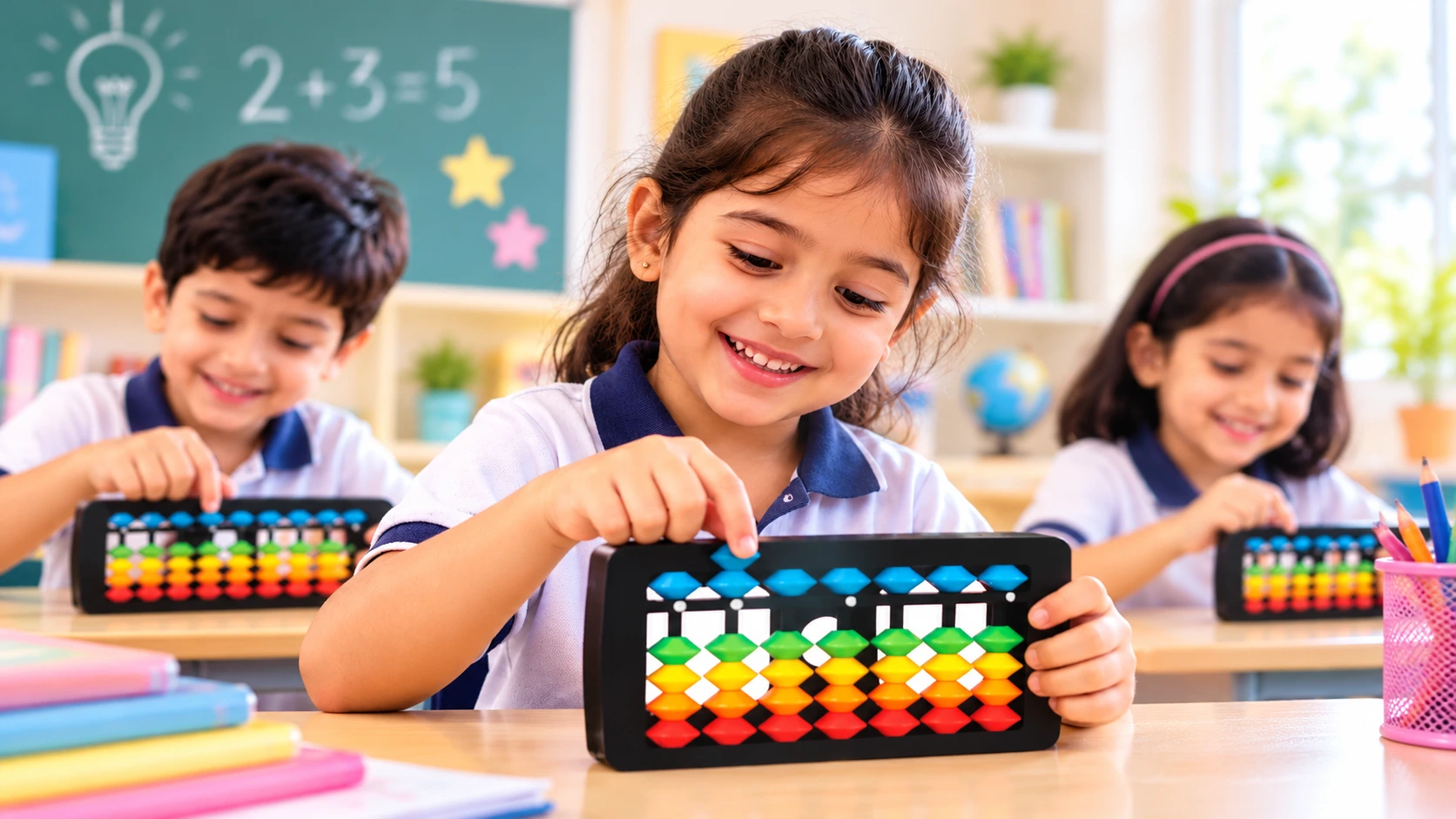
Junior abacus learning is a fun, hands-on way to teach young children how numbers work. Instead of memorising tables, kids move colourful beads and watch maths take shape. As a result, they learn faster and enjoy it more. In this guide, you will learn what a junior abacus is, how it helps children, and how schools can start a programme. Parents, teachers, and principals will all find practical tips here. Finally, you will see how EduPro Learning can help your school get started.
What Is a Junior Abacus?
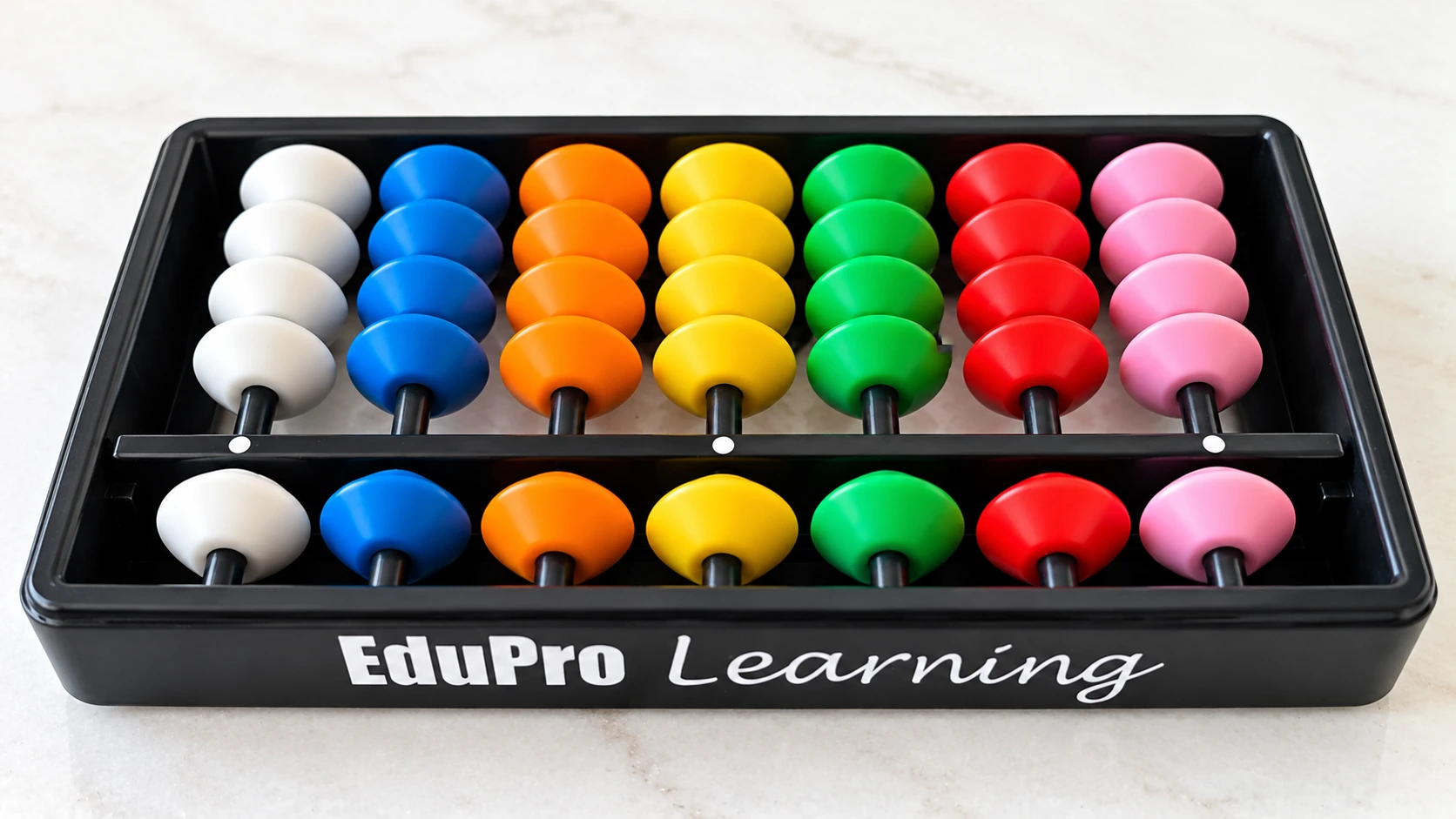
A junior abacus is a small counting frame designed for young children(for pre-primary students). It has rows of beads that stand for ones, tens, and hundreds. For example, a child moves two beads up to show the number two. The tool is simple, but it teaches big ideas about place value.
Some people call it a mini abacus because it is compact and light. Also, it fits easily on a small desk, so young children can hold it comfortably. Over time, children learn to picture the beads in their minds. This skill is the heart of abacus maths.
Key Benefits of Abacus Maths for Young Learners
Parents often ask what children actually gain from the abacus. Teachers ask the same question. The answer is that the abacus builds several useful skills at once. Let us look at the main ones.
Better Focus and Concentration
Moving beads needs careful attention. Children must watch each step and finish it before they move on. As a result, their focus improves with regular practice. Teachers often value this calm, steady habit.
Faster Mental Calculation
Children first use the real beads. Later, they imagine the beads and solve sums in their heads. This step is called visualisation. In other words, the child sees the abacus without touching it. Because of this, many learners calculate quickly and with less stress.
Stronger Confidence
Small wins matter a lot to young children. When a child solves a sum alone, they feel proud. Consequently, they approach new topics with a more positive attitude. Parents may also find that homework time feels calmer.
Why Schools Should Add an Abacus for School Programme
Principals want programmes that add value without adding stress. An abacus for school use does exactly that. First, classes are activity-based, so children stay engaged. Second, the programme fits well beside the regular maths curriculum. Third, it gives the school a clear and attractive offer for parents.
Teachers also gain from the structure. A good programme provides lesson plans, practice sheets, and progress checks. Therefore, teachers can focus on guiding children instead of building materials from scratch. In addition, regular assessments show each child’s growth.

How a Junior Abacus Class Works
A typical junior abacus class follows a clear path. Short lessons keep young minds fresh. Here is a simple example of the learning steps:
- Children learn to hold the abacus and set the beads.
- They practise reading and showing numbers on the frame.
- Next, they learn simple addition and subtraction.
- Then they move on to bigger numbers, and later to multiplication and division.
- Finally, they practise on an imaginary abacus in their minds.
Each stage builds on the one before it. Therefore, children should never feel rushed. Teachers can also repeat a stage if a child needs more time. For a quick look at the beads in action, watch this short abacus video.
Practice Tips for Parents at Home
Short, daily practice works best. Ten to fifteen minutes is enough for most young children. Also, praise effort instead of speed. Meanwhile, keep sessions playful, for example by turning sums into small games.
Classroom Tips for Teachers Using a Junior Abacus
Teachers can start each class with a quick bead warm-up. Then they can show one new idea at a time. In addition, pairing children for friendly practice builds teamwork. Finally, a short review at the end helps the lesson stick.
Abacus Olympiad: Giving Children a Goal
Goals keep children motivated. An Abacus Olympiad offers a friendly contest where children test their skills. It also teaches them to stay calm under time limits. For instance, the Mindpro Abacus and Vedic Math Olympiad 2026 is one event that schools can explore.
However, competition should never be the only aim. The real prize is steady progress and joy in learning. Therefore, schools should celebrate every child’s effort, not just the winners.
Frequently Asked Questions
What age is best to start a junior abacus?
Most programmes welcome young children (Pre-primary) who can count and recognise numbers. However, the exact starting age depends on the programme.
Is a mini abacus the same as a junior abacus?
A mini abacus is a type of the tool which is used to teach abacus to the preprimary students.
Does abacus maths replace school maths?
No, it does not. Instead, it supports school maths by strengthening number sense. As a result, children often feel more at ease with numbers in class.
How can a school start a programme?
Schools can introduce the Junior Abacus Program in collaboration with an experienced experiential learning provider like EduPro Learning. Designed for young learners in Jr. KG and Sr. KG, the program makes early mathematics engaging through hands-on abacus activities that help develop number sense, concentration, memory, and foundational calculation skills.
Discover more about the BrainPro Junior Abacus program.
Start a Junior Abacus Programme Today
Connect with EduPro Learning to explore the program and take the first step towards making mathematics more interactive, enjoyable, and rewarding for young learners.
